

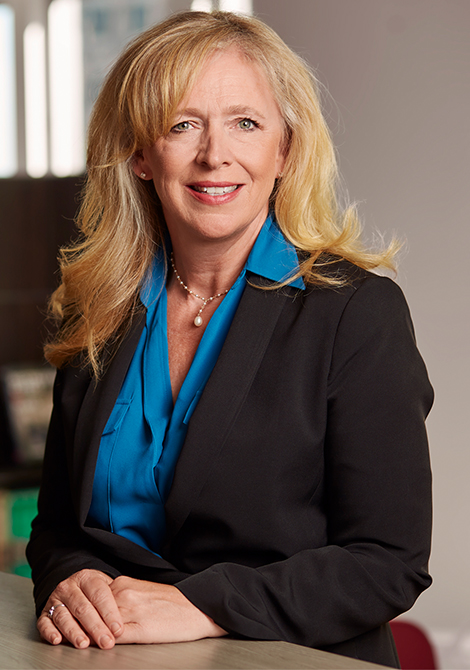
Barbara Best-Santos, ForrestPerkins
What are the biggest challenges you’re facing?
The hardest part has been the instant change in the way we work and communicate. We have adapted well, but the immediate flip of the switch event that catapulted us into this new normal—albeit temporary—work situation was like being tossed into a hurricane without warning. In addition to our regular workload, there were so many immediate questions that needed to be answered—how are our employees, how are our clients, what is the financial impact, how long will this last—and the result was a continuous stream of calls via Webex, Skype, Teams, Zoom, etc. We all have been working such long hours and there still is a lot of uncertainty in our industry, so we need to be mindful of finding humor, connection, peace, and a light at the end of the tunnel.
What is your current work situation?
Our entire team went remote after March 13th, and we remain that way to date. We have five offices and regularly work in teams across these offices, so we are very used to connecting remotely. Each local team is working hard to stay close. In San Francisco, we have daily morning check-in calls, happy hours, a weekly competition around healthy living, and we have a text chain going all day long with our favorite jokes and memes to keep things light.
We are part of a large company with over 1,000 employees, so it was very important for us to get out in front of the impending industry downturn and work quickly to ensure our company’s health and our employee’s security. We took immediate action in reducing costs including overhead, operations, and nonessential spending. We did also enact temporary, tiered pay cuts for all employees. There have been some furloughs, hour reductions, and staff reductions across the firm, but it does not represent a large portion of our staff. We are working hard to ensure that there are no further reductions, and we can successfully ride out this unexpected event.
What are some of the positive effects of working in these new ways?
The greatest positive for many of us has been not having to commute. That is a regional issue for sure, but I, for one, normally spend a couple hours a day commuting. The only way I am able to manage the increased workload from this massive shift is by waking up and getting right to work. It has also allowed me to cook more and spend a bit more time with my son.
One of my favorite things is hearing more birds (not cars), seeing kids riding their bikes, and families walking more in my neighborhood—there is something striking about how we have had to slow down and accept change that is beyond our control. I am always struck by the sense of community and our adaptability that takes hold during a time of collective crisis. I take time to appreciate the positive moments that can be found in all of the chaos. That is a gift.
What is your pulse on the industry?
Though we are facing an unprecedented time, I keep reminding myself and my team that this all resulted from a health crisis rather than an economic crisis. We were operating in very heady times in the hospitality industry, so while we will likely see a lot of change, I also foresee a collective appetite to get us back to business as soon as it makes sense.
Some projects are continuing with no delay, some are seeing delays only due to sheltering regulations, some clients are pressing the pause button, and others are discussing austerity in budgets moving forward. We have seen it all, and we will continue to see a variety of responses depending on where projects are in the life cycle and how well capitalized they are.
What does this mean for the future of hospitality?
We are looking at two phases as we emerge from the shelter-in-place period. The first will be a reintegration phase, which will be all about how we navigate a period of time with a continued infection threat and a lot of uncertainty, coupled with a real desire to get back to living. There will still be a lot of fear and a real need to keep people safe. This will be the greatest shift in our industry, and we don’t know how long it will last. We are all figuring out what it looks like and there is a lot of work to do by all of us to get ready for reactivation. The second phase will be our new normal, and it will be some combination of pre-COVID life and a wellbeing-focused reality that will make our industry stronger than ever.
Lastly, share some good news! Have you done anything to stay busy in these crazy times?
We belong to such an amazing industry and the way we have all come together has been so heartwarming. I have had so many wonderful calls, texts, and even Zoom happy hours with industry friends. I truly believe that adversity makes us stronger and when we struggle together we connect more deeply. This is a pause button that allows us to take stock of our time and refocus on what is important. I love to find the silver linings.